The honest accounting for a reference MCP gateway: the deliberate simplifications, what the newer protocol revision changes, and everything still missing before production.
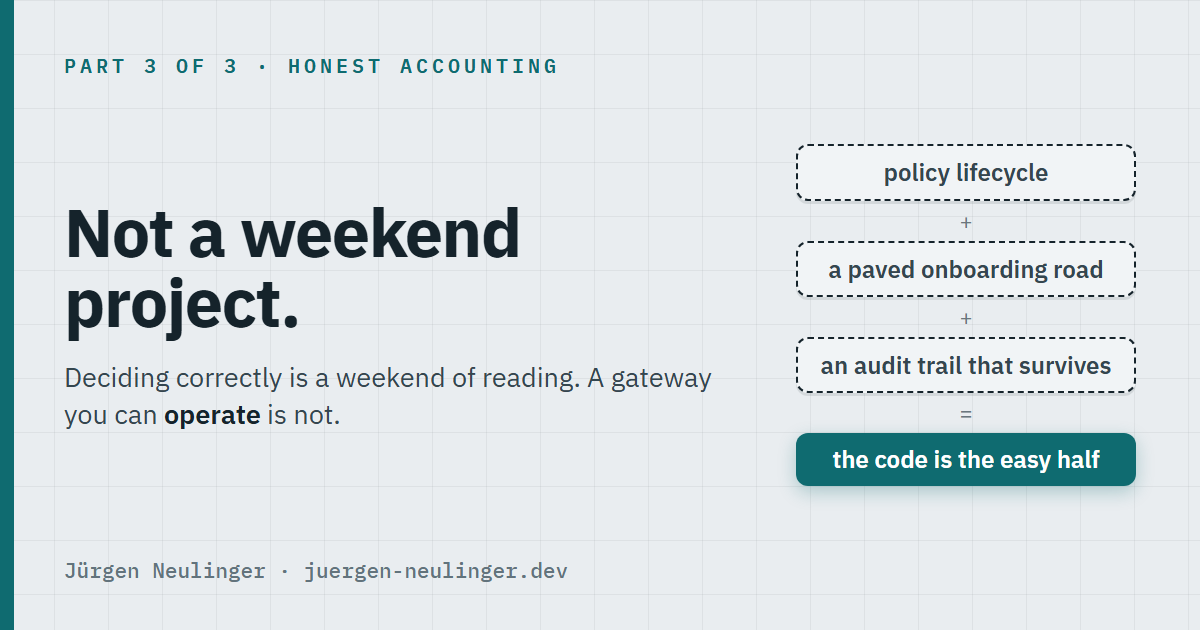
The honest accounting for a reference MCP gateway: the deliberate simplifications, what the newer protocol revision changes, and everything still missing before production.
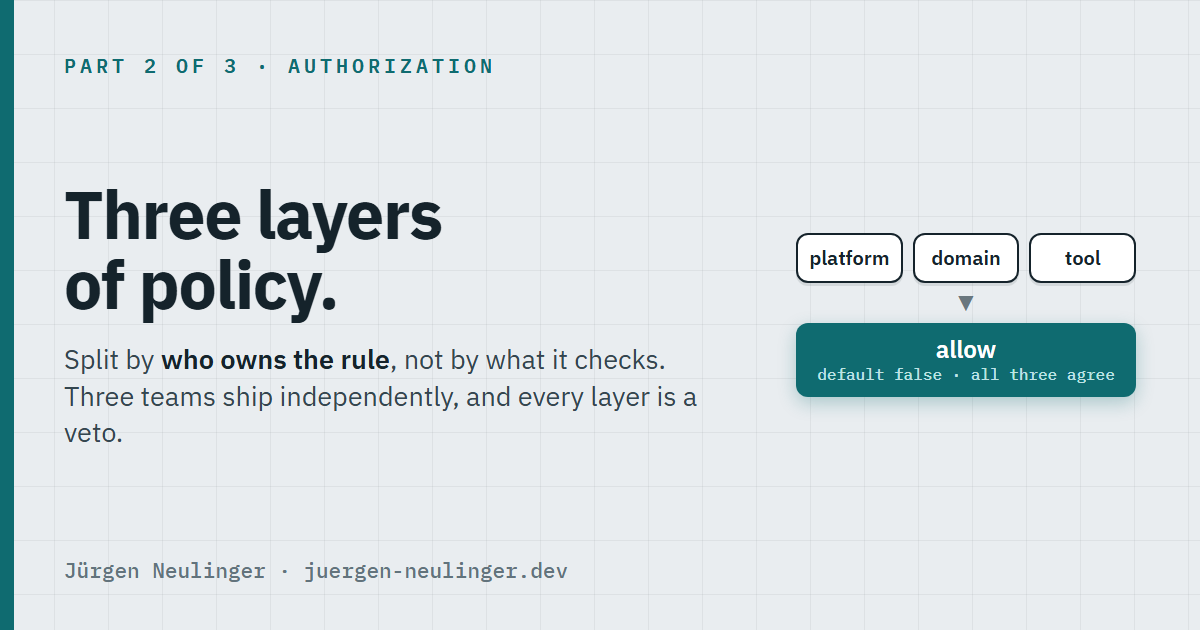
Splitting MCP authorization across three Rego layers with three owners — platform, domain team, tool owner — so that no team can widen another team’s grant.
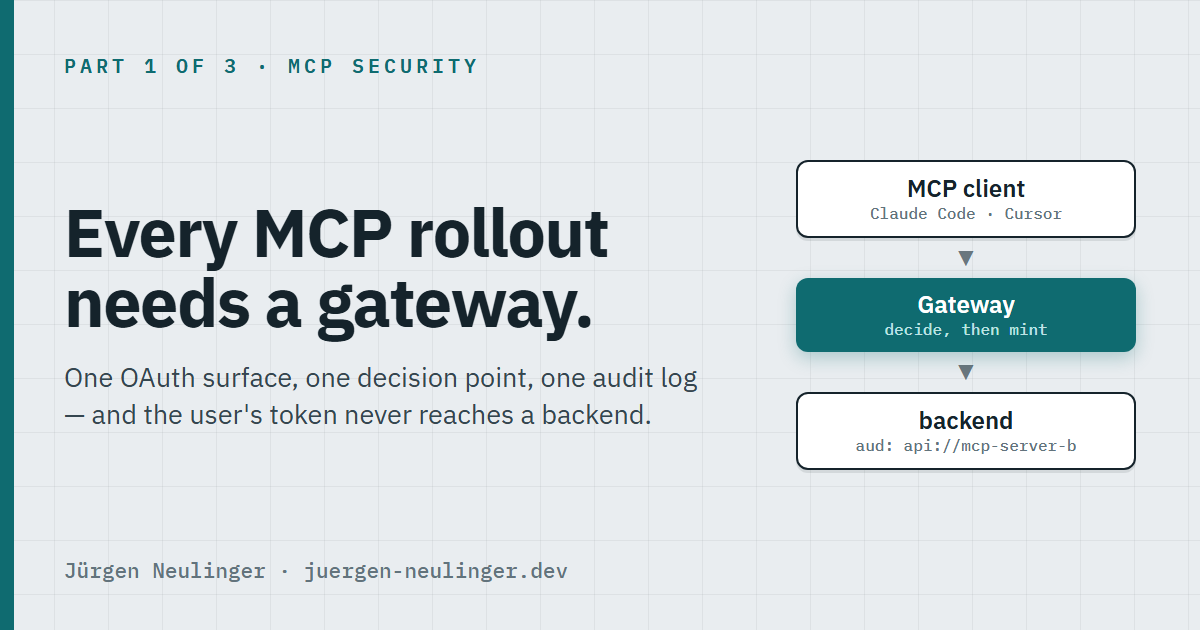
A walk-through of an open, MIT-licensed reference MCP gateway built on FastMCP, OPA and Microsoft Entra ID — why an enterprise MCP rollout needs a single control point, and what that control point has to do.
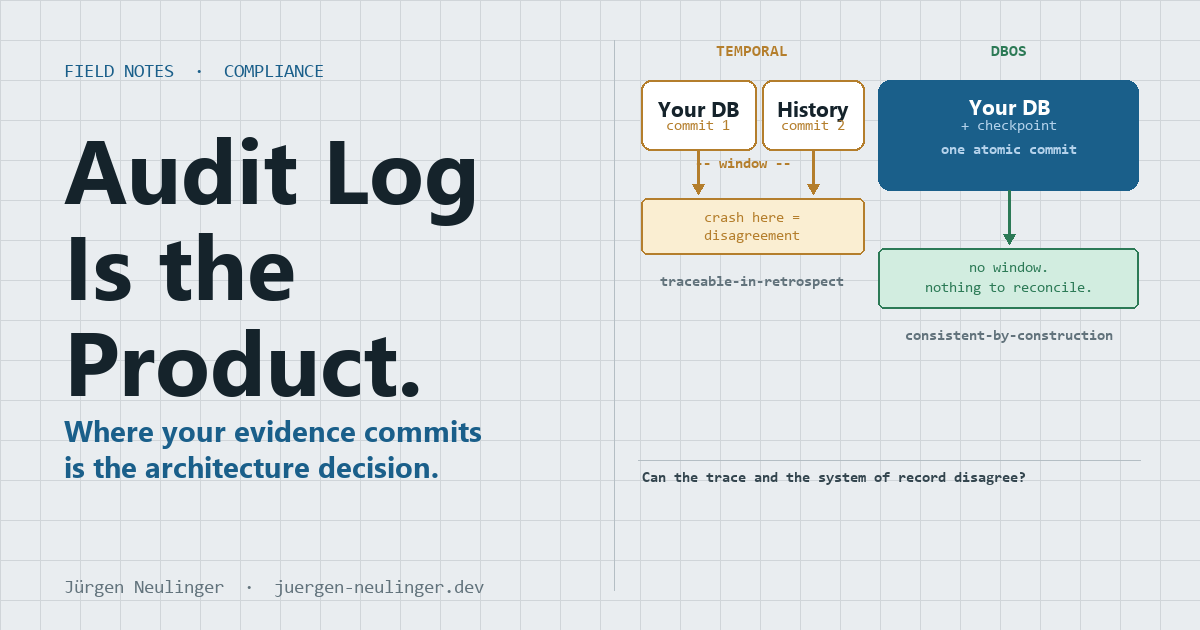
The Audit Log Is the Product Where your workflow engine keeps its history decides whether your AI system survives an audit. Most teams make that decision by accident. There’s a question that reshapes how you architect AI systems in a bank, and it doesn’t come from your users. It comes from an auditor, eighteen months after go-live: “Show me what the system did in this case — and prove that what it recorded is what actually happened.” ...
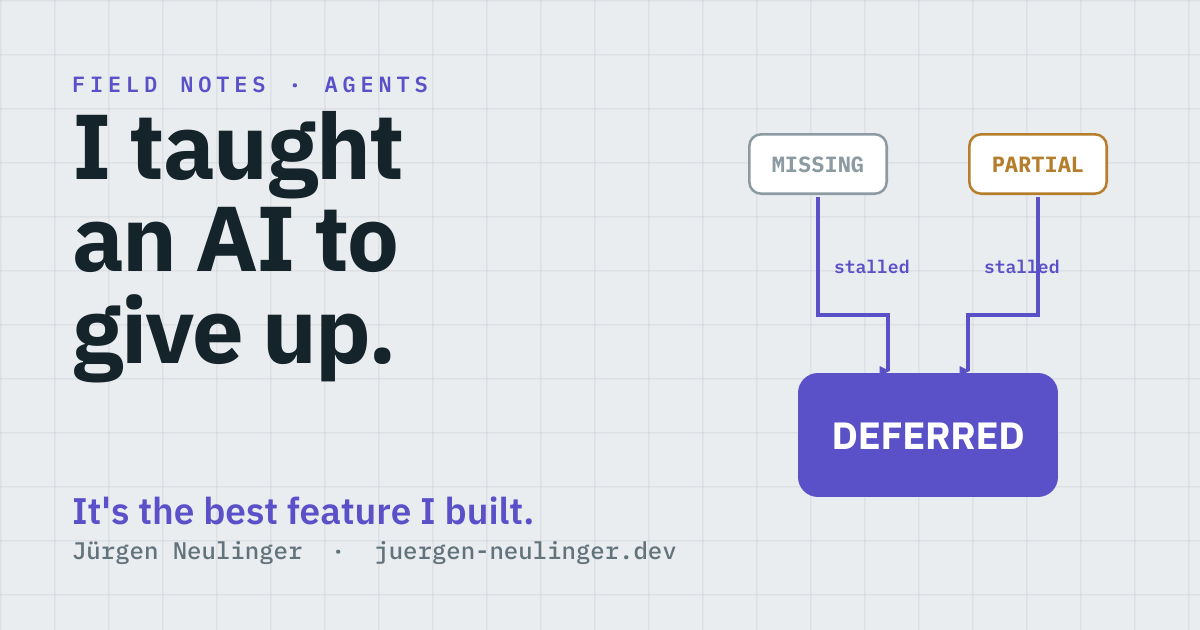
Quick context: I built a system that runs structured interviews. A user has a conversation with an LLM about a topic — an internal intake, a due-diligence questionnaire, a structured assessment — and on the other side comes a structured record. Every required field is filled, partially filled, or explicitly marked as “we couldn’t determine this.” Conversational on top, schema-driven underneath. I inherited an agent. Hundreds of lines of prompt, written by hands that had since moved on. Rules referencing bugs I’d never heard of. Three different definitions of “done,” each one valid depending on which paragraph you stopped at. I tuned it the way you tune any prompt you didn’t write — adding clauses on top, hoping, never sure which one was load-bearing. ...